Sunday, August 19, 2018

MotionSavvy - Enabling Interaction Between the Deaf and the Hearing

How I Serve

I search for emerging companies, technologies, disruptive technologies, 

innovations, start-ups and up-starts. I’ll look to match potential problems… 

e.g. “plastic pollution” to solutions… e.g. 3D Printer for recycled plastic waste…

for potential venture capitalists, angel investors, and online funders. 

I’ll also highlight a variety of topics including funding success stories, 

the environment, housing, medical, artificial intelligence, science, 

aging populations, disabled populations, social entrepreneurs, philanthropy, 

and topical news. I’m always searching for great people innovating, 

inventing, and doing, great things.


The 411: Successfully Funded - UNI - The World's First Real Time Translation Technology that Converts Sign Language to Grammatically Correct Spoken Language.

Found on: - http://www.motionsavvy.com/preorder.html
                 
                     https://wefunder.com/motionsavvy

                     https://youtu.be/dItEFHZtkZo


A Communication Platform for the Deaf

Motionsavvy is an company that solves communication challenges between businesses and deaf and hard of hearing customers with recent developments in gesture recognition and machine learning technology.

Since 2011, Motionsavvy has been building a database of signs that can be used by various industries with communication needs

WHAT WE DO

MotionSavvy is a company that enables interaction between the deaf and the hearing without the need for a 3rd party interpreter. The companies product, UNI, was developed by four deaf RIT engineering graduates with first-hand experience of the problem. UNI is a SAAS platform that uses standard mobile devices and a gesture recognition sensor to interpret American Sign Language (ASL) in real time. This provides a simple solution that is available 24/7 without a costly 3rd party interpreter.

OUR AMBITION

MotionSavvy seeks to provide a simple cost effective solution for businesses that want to better serve customers and be ADA compliant. It's product not only serves deaf customers but enables these business to hire deaf individuals.

$10B B to B market

38 million hearing impaired in US market

Founded by all deaf team that knows the problem intimately

Subscription model ensures recurring revenue

Rochester Airport Letter of Intent ( $175,000 consultancy contract )

Sign To Speech

Communicate with your peers in a whole new way. UNI uses a whole new way to track both hands and all 10 fingers with incredible speed.
Speech To Text
Making life a little easier with the best voice recognition software out there used by millions to translate speech into text. 

SignBuilder

UNI's SignBuilder feature lets you record, label, and edit your signs in real time. 


How does a Pilot Work?

A pilot program is operated as a consultancy contract and billed accordingly.

Use Case Development

We'll work with your organization to figure out how UNI fits in your organization.

Dictionary Customization

We'll provide a basic dictionary, and make any modifications necessary to support the vocabulary your organization needs.

Installation

We'll work with your IT department to install UNI in your sites.

Testing

We train your employees and test the product providing a report demonstrating the success of the pilot!

What are the benefits of running a pilot program?

Meet ADA requirements for your business!
Improve your customer service
Improve accessibility for your employees

What is a use case? 

A use case is defined as distinct areas UNI will be used, for example, ticketing counters at airports are different than security check points, each is a separate use case.

Pricing is dependent on the length of the pilot, amount of dictionary customization required, and the number of use cases your business needs to support.

UNI for Airports

MotionSavvy is currently in the middle of a pilot at Rochester Airport in upstate New York , USA. Your airport can sign up to be next by getting in touch with us or purchasing UNI's. Traveling can be stressful for anyone and for sign language users it can be even more difficult.

Medical,Hospitals, & Clinics

MotionSavvy is perfect for your medical center, allowing you to meet ADA requirements ( US ) . Additionally allowing you to save money by offsetting interpretting cost which is required by law.

UNI for Educational Institutions

If your are an educational institution UNI can be used to provide deaf students the accessibility they need without 24/7 interpreting.

UNI for Banking

Join MotionSavvy investor Wells Fargo in it's belief that banks need to innovate by providing technolgies for deaf cutomers. Managing your personal finances can be difficult enough, but imagine being deaf while trying to communicate complex financial contracts/loan paperwork. UNI takes the stress out of communicating with deaf individuals at banks.

UNI for Retail


MotionSavvy's perfect for retail establishments looking to provide better service to there customers. Many deaf individuals face challenges when doing things that hearing individuals take for granted everyday (like going through a drive through and ordering through the machine).

UNI for Deaf Individuals


MotionSavvy's UNI was originally invented to help the deaf community communicate in every day situations. However, we have since shifted the focus to businesses who can afford the product. You can pre-order but you will not receive your software license until the current pilot programs are over so we can fully stress test the product in real world environments.

WF: How does Motion Savvy work? 

MS: MotionSavvy works by utilizing gesture sensor that senses your hands and arms , a tablet , a custom case, and our software. The user simply launches the application and starts to sign. Both the deaf and hearing user can see what is being said in real time.

The typical flow of the conversation involves sign language to voice , and then voice recognition to text ( and eventually signing avatars ). Both sides of the conversation can see what is being said on the screen via text displayed in the chat area. Additionally as a last resort , users can tap on the screen and an on screen keyboard is a available for manual input. Note that all text inputted and signed comes out in grammatically correct English.

WF: How does UNI learn new vocabulary? 

MS: UNI contains two important pieces of software that enables real time recognition , the SignBuilder training program and the real time recognition program .

1. MotionSavvy utilizes a dedicated team of ASL signers. This team populates the different ASL dictionaries with as much variations as possible ( 10 signers can populate over 9,000 samples a week ). They utilize the SignBuilder software which enables them to simply record and upload various signs to our cloud infrastructure for learning.

2. MotionSavvy takes all those recorded samples of signs and efficiently generates a model of ASL which is then distributed via updates to the individual tablets.

3. When the user launches or updates the software the latest model is loaded into the recognition engine for real time recognition.

Interested users can view the SignBuilder software in action at the following blog post :

https://medium.com/@MotionSavvy/signbuilder-efa7b88e9f77#.qgsm7lyjw

WF: What is the sweet spot for MotionSavvy, what is the most prevalent use case? 

MS: We want MotionSavvy to fill the gaps of everyday 1 on 1 communication. 38 million people in the U.S. are hard of hearing and all of these individuals have experienced traveling through airports , going to the hospital , or done any type of banking.


Large portrait alex 1 croppedsmall
Alexandr Opalka
CTO
Alexander was a software engineer at RailComm. He has a B.S in computer engineering from Rochester Institute of Technology.


Thursday, August 16, 2018

Vinder - List, Discover, and Buy Ultra-Local Produce

How I Serve


I search for emerging companies, technologies, disruptive technologies, 

innovations, start-ups and up-starts. I’ll look to match potential problems… 

e.g. “plastic pollution” to solutions… e.g. 3D Printer for recycled plastic waste…

for potential venture capitalists, angel investors, and online funders. 

I’ll also highlight a variety of topics including funding success stories, 

the environment, housing, medical, artificial intelligence, science, 

aging populations, disabled populations, social entrepreneurs, philanthropy, 

and topical news. I’m always searching for great people innovating, 

inventing, and doing, great things.


The 411: Investment Opportunity - Neighbors Feeding Neighbors


Found on:
- https://wefunder.com/vinder
                     veggievinder.com

Neighbors Feeding Neighbors
As an online farmers market for home gardeners, we help people easily buy and sell homegrown produce with their neighbors. This not only incentivizes home gardeners to grow fresh, amazing fruits and vegetables but opens up communities to more personal connections. We keep those relationships personal by allowing those connections to form organically, taking only a 20% transaction fee on the buyer side. So far, this has resulted in a 90% retention rate for growers and 77% for buyers.

Square cropped 20160801 091444 copy
Sam Lillie
Founder/CEO
Sam started Vinder by knocking on the doors of his neighbors and selling/delivering on his bicycle.

Why you may want to invest
1Online beta marketplace organically grew to over 90 cities in 19 states in 4 months.
2Winners of the 2017 Silicon Valley Business Plan competition.
3Average order size is $15.88.
4Our mobile app, which goes live on Android + iOS on August 21, has 700+ pre-registered users.
5Retention rate for growers is 90% and 77% for buyers.
6CEO Sam Lillie was named the Young Entrepreneur of the Year by Jefferson County, Washington in April 2018.
7Graduate of the MassChallenge Business Accelerator.
8Sam started by knocking on his neighbor's doors, and in the first 3 months of business, hand-delivered over 300 lbs of produce on his bicycle.
Our Ambition
Bring the now-global food system back to the local community by connecting local gardeners with their neighbors. Already in 90 cities in 19 states, we've grown completely organically through word of mouth and demand, proving our market on a nationwide scale. With a new mobile app on the way, our ambition is to be the largest homemade grocery in the country, one that relies on communities and neighbors without needing any inventory or delivery vehicles.
Vinder is a trusted community marketplace for people to list, discover, and buy local produce. We connect home growers who have an abundant garden with community members looking for local produce. We're here to create a transparent agricultural system that informs consumers about who's growing their food, how it's being grown, and where. Vinder makes it easy to buy ultra local food, boost your community's economy, and promote sustainable agriculture.

Let's Make Produce Local Again

In the modern age, grocery stores source fruits and vegetables from all over the globe. Unsurprisingly, our produce just isn't as fresh anymore. The solution? Vinder. 
We allow users to easily buy the freshest produce possible by connecting home gardeners to their neighbors through an online marketplace. Gardeners post their produce, then neighborhood buyers purchase and handle the pickup and delivery. We take a 20% service fee from the buyer, keeping gardener costs low to encourage a market full of diverse, interesting, local produce.  

Vinder Creates Value for Both Buyer and Gardener

For home gardeners, using Vinder is a no-brainer. Instead of just enjoying the fruits of their labors themselves -- or, worse, letting excess fruits and veggies go to waste -- they now have an easy-to-use marketplace where buyers are actively clamoring for the same produce they'd be growing anyway. We encourage a diverse set of crops by not taking a service fee, encouraging home gardeners to connect to as many of their neighbors as possible. Now that they can sell on Vinder, many of our gardeners have even said they plan on increasing their garden sizes. 

Our buyers are generally between 25 and 45 and work full time. They are people who prefer organic produce but might not have the money or time to source that produce. Instead, they use Vinder, sacrificing a small 20% service fee to eat food they know was grown in their neighborhood. Rather than supporting huge grocery store conglomerates, they get to support their neighbors while eating fresher food. It's a winning relationship for our users, which we know because right now, we have more buyers than growers. 

We've Grown to 90 Cities Organically

We started out of Port Townsend, Washington. Our founder, Sam, went from one small order to delivering more than 300 pounds of produce on his bike in just three months. In 2017, we were still focusing on our one location with our beta testing, but users around the country just started using our marketplace. Without an ounce of marketing, we grew to over 90 cities in 19 states in 4 months
Now, with some momentum, we're launching an app on August 21 that will make it even easier to interact with our online marketplace. We're imagining a future where Vinder becomes the largest homemade grocery distributor in the country. By relying on communities and neighbors and not requiring any inventory or delivery vehicles, we can help create a more sustainable food ecosystem.

WF: What is Vinder? 
LILLIE: Vinder is an online farmers market for home gardeners to buy, sell, and trade with their neighbors. Our goal is to revolutionize the food system and become the world's largest neighbor-made grocery store with zero inventory and zero delivery vehicles.
WF: What led you to start the company? 
LILLIE: I graduated from San Jose State University in 2015 with a degree in international business. Then, I hiked from Mexico to Canada on the Pacific Crest Trail. It was a solo hike, so I needed time to readjust to society. I ended up in a small town on the Olympic Peninsula called Port Townsend, Washington, and decided to live there for three months while I applied for jobs in Seattle. In the meantime, I was working behind the desk at a gym in Port Townsend, filling water bottles, folding towels, and changing 16 trash cans a night.
I applied to 106 jobs and got one offer, which was cold calling eight hours a day to sell background check technology. I turned it down. I then went to the business resource vendor and asked what kind of resources they had. They suggested that I come back for a Jefferson County Chamber of Commerce meeting, so I did.
There was a group of about 20 community members between the ages of around 25 and 65 having a roundtable discussion about the positives and negatives of the town. The biggest negative that came up over and over again was the fact that it's a service industry area. It's a town of 10,000 people where the average age is 57. Most people were working two to three jobs to make ends meet, so their schedules weren't allowing them to take advantage of the town's farmers market. It’s held twice a week, on Wednesdays at noon and Saturdays from 8:00 a.m. to 2:00 p.m. They were talking about how they would love to be able to access the local organic produce that was available, but they couldn’t afford it, and they didn’t have the time to go to the farmers market. So, they had to resort to buying really low-quality produce. This was a big problem for them.
I started thinking about it, and I asked them, if there was a service that provided access to organic produce all the time for a reasonable price, is it something you guys would use? Everyone in that meeting said yes. So I said, okay, I'll figure it out. I had a whole lot of time. I didn't have any money. 
I walked home from the meeting and I saw apples growing in trees and kale growing in front yards. I wondered why we couldn’t just buy produce from our neighbors? To me that sounded reasonable and logical. There seemed to be a surplus, as there were apples in trees and on the ground going to waste. I walked up to a door, knocked, and said, “Hey, my name is Sam. I happened to walk by and see you had a bunch of apples. Have you ever thought about selling them?” They wanted to know what the heck I was doing in their yard, and I told them to bear with me for a second, because I had an idea. I asked them if they would be willing to sell their apples if I could find someone to buy them. They said sure, because they couldn’t eat them all. They were just rotting on the ground and getting eaten by the deer. I said, “Okay, well, I'll be back.” And I started knocking on more doors.
When I was at work, behind the desk at the gym, I would ask everyone who walked by if they wanted some fruit or veggies. My first sale was actually a pound of cherries out of my mom's cherry tree. I climbed into that cherry tree, hand-picked a bunch of cherries, and put them into a ziplock bag. It weighed exactly one pound, and I sold it to a member at the gym for six bucks. It was a dollar cheaper than a smaller bag of cherries at Safeway, which was a mile from where the customer lived. I gave my mom five bucks and I kept the dollar. That was 20% right there and that's how I came up with the business model. I incorporated the next day. That was July 11, 2016. Within three months, I had hand-delivered about 300 pounds of produce on my bicycle. Mark, our CTO, was actually one of my first customers.
Large cropped 20160801 091444 copy
Sam Lillie
Founder/CEO
Sam started Vinder by knocking on the doors of his neighbors and selling/delivering on his bicycle.

Large cropped markwefunder
Mark DeJarnatt
CTO
Mark was one of Vinder's first customers. He has over 18 years of management and web dev. experience


Tuesday, August 14, 2018

Can Hair Loss be Reversed with Oxy133, a Sterol Based Drug Candidate?

How I Serve


I search for emerging companies, technologies, disruptive technologies, 

innovations, start-ups and up-starts. I’ll look to match potential problems… 

e.g. “plastic pollution” to solutions… e.g. 3D Printer for recycled plastic waste…

for potential venture capitalists, angel investors, and online funders. 

I’ll also highlight a variety of topics including funding success stories, 

the environment, housing, medical, artificial intelligence, science, 

aging populations, disabled populations, social entrepreneurs, philanthropy, 

and topical news. I’m always searching for great people innovating, 

inventing, and doing, great things.


The 411: Investment Opportunity - From Mice to Men (and Women)


Found on: - https://experiment.com/projects/can-hair-loss-be-reversed-with-oxy133-a-sterol-based-drug-candidate?s=discover

About This Project

Hair loss can affect both men and women, often leaving a negative impact on the affected person’s life. Stem cells associated with hair follicles drive normal hair growth but lie dormant in bald spots. We propose to test topical applications of Oxy133, a drug candidate that can safely increase Hedgehog signaling, in a mouse model of hair growth. We hypothesize that dormant hair stem cells will be stimulated by Oxy133, resulting in increased hair growth in mice and (eventual) human testing.

Ask the Scientists

JOIN THE DISCUSSION

What is the context of this research?

Available drug treatments for hair loss (Propecia, Avodart or Rogaine) are modestly effective at best and often plagued by unpleasant side effects. In male pattern baldness, hormonal and other factors lead to a shortened growth (anagen) phase of the hair follicle, resulting in deactivated hair stem cells and diminished hair growth. To regrow lost hair, it may be possible to reactivate dormant hair stem cells by stimulating their cellular signaling. The Hedgehog signaling pathway provides a cellular signal crucial for hair growth that can trigger hair follicles to reenter an active growth phase. At MAX BioPharma, a startup company based in Santa Monica, California, we have developed Oxy133, a drug candidate that can stimulate Hedgehog signaling through a safe ‘allosteric’ mechanism.*

What is the significance of this project?

It is estimated that 40 million Americans suffer from hair loss.* Most hair loss is actually caused by a lack of hair regrowth rather than the increased shedding of hair. Available treatment options typically work far better to prevent further hair loss than to regrow lost hair. This project will address the question whether Oxy133 can safely stimulate hair stem cells in mice and trigger increased hair regrowth. In principle, this application could translate into a hair growth treatment for humans, as Hedgehog signaling functions similarly across species.* Successful experimental outcomes would then allow us to partner with pharmaceutical and cosmetic companies, as well as investors, to further develop the drug and advance to human testing and eventual commercialization.

What are the goals of the project?

The immediate goal of the project is to test the ability of Oxy133, a sterol based activator of Hedgehog signaling, to enhance hair growth in mice through topical application of the compound, a simple but effective model of hair regrowth. We believe that Oxy133 is highly suited for dermatological applications due its high solubility in skin oil. If successful, this pilot study will provide data that can be presented to potential industry partners and investors who will help us develop the technology for commercialization. The long term goal of this project is to offer a new, safe and effective treatment option to people suffering from hair loss.

Budget

There are standard costs that go along with animal experimentation. $5,000 would cover all costs from creating more of the drug candidate for use, housing the mice, paying the scientists, applying the drug, recording the results, and maintaining the lab.

Endorsed by

The project is important as it will teach us about the effects of Oxy133, an oxysterol, on hair growth in mice, a crucial first step in finding a new treatment for hair loss in people. As the Director of Molecular & Cellular Biology at MAX Biopharma, I enthusiastically endorse this project.
Feng Wang


Meet the Team

Farhad Parhami
Farhad Parhami
Ph.D, MBA, Founder, CEO

Affiliates

UCLA

Team Bio

At MAX BioPharma, we aim to realize the therapeutic potential of a previously understudied group of lipid molecules, so-called oxysterols, and understand their role in human health and disease. Leveraging combined expertise in the fields of cellular biology, lipid biochemistry and drug discovery, we work to build a new generation of therapeutic agents that can address a number of unmet medical needs.

Farhad Parhami

Dr. Farhad Parhami worked at UCLA as a biomedical researcher and Professor of Medicine for over 22 years. While at UCLA, Farhad first studied the effects of certain sterols, including cholesterol and oxidation products of cholesterol, so called oxysterols, on the cellular signaling of adult stem cells. Remnants from our prenatal period, adult stem cells can be found in all human tissues and are crucial elements for our body’s normal maintenance as well as repair and recovery from injury or disease. For example, skin injuries, such as cuts or bruises, are repaired with help from skin progenitor cells, so called fibroblasts, which become activated during wound healing. Similarly, broken bones heal by drawing in bone progenitor cells that reside in the bone marrow and turn into mature bone cells, so called osteoblasts, near the site of bone injury. Farhad’s research demonstrated that adult stem cells can be activated by oxysterols without affecting other cells that are not stem cells. That is because oxysterols work by stimulating stem cell specific signals, such as Hedgehog signaling, in a safe manner that does not lead to overstimulation, which can be potentially dangerous. This so called “allosteric” activation amplifies only preexisting Hedgehog signals found in the adult stems cells.


How Do Chemical Exposures Trigger Autoimmune Diseases?

How I Serve


I search for emerging companies, technologies, disruptive technologies, 

innovations, start-ups and up-starts. I’ll look to match potential problems… 

e.g. “plastic pollution” to solutions… e.g. 3D Printer for recycled plastic waste…

for potential venture capitalists, angel investors, and online funders. 

I’ll also highlight a variety of topics including funding success stories, 

the environment, housing, medical, artificial intelligence, science, 

aging populations, disabled populations, social entrepreneurs, philanthropy, 

and topical news. I’m always searching for great people innovating, 

inventing, and doing, great things.


The 411: Successfully Funded (but don't let that stop you:-) - Are Harmful Chemicals Causing Autoimmune Disease?


Found on: - https://experiment.com/projects/how-do-chemical-exposures-trigger-autoimmune-diseases?s=discover


About This Project

The cause of onset of autoimmune disease is poorly understood, but may be linked to exposure to certain chemicals. We plan to study the response of melanocytes to monobenzone and thyrocytes' response to PBDE and BPA to determine how they lead to autoimmune diseases like vitiligo and Hashimoto's thyroiditis. To do this, we will look at the antigens (molecules presented to immune cells) on the cells' surfaces using mass spectrometry.

Ask the Scientists

JOIN THE DISCUSSION

What is the context of this research?

Many scientists believe a combination of genes and environmental factors, like chemical exposure, causes autoimmunity. However, little is known about how chemical triggers work. Research suggests monobenzone binds to a protein in skin pigment cells, and that this activates immune cells which attack and cause vitiligo, a condition in which skin loses its color in patches (van den Boorn et. al, 2011). There is also evidence that chemical-protein interactions cause thyroid autoimmunity, as antibodies against thyroid protein are found in patients exposed to PDBEs (Pearce & Braverman, 2009). By studying chemical-induced autoimmunity in vitiligo and Hashimoto's thyroidits, we hope to find and characterize changed proteins whose role in these disorders is not yet understood.

What is the significance of this project?

Vitiligo and Hashimoto's thyroiditis seem to be linked - those with one disease are at higher risk of getting the other (Cunliffe et al, 1968). Further, the immune system responds to similar cellular components, or antigens, as well as cellular stress signals in both Hashimoto's thyroiditis and vitiligo (Gong et al., 2016).
Finding the proteins that are changed by these chemicals and activate the immune system in these diseases would make it easier to develop better treatments.

What are the goals of the project?

We would like to study the proteins in cells exposed to the chemicals in question using mass spectroscopy, to see if there are any differences that could cause an autoimmune reaction. We will test two concentrations of chemicals in each experiment. Cells will be exposed to the chemicals overnight before being prepared for mass spectrometry. Any possible neoantigens (changed proteins that can activate the immune system) that are identified only in cells exposed to the chemicals would be tested by exposing immune cells to them. If the cells respond and try to destroy these proteins, this would suggest that they are indeed neoantigens and may help cause autoimmune disease.

Budget


We have applied for private research grants, but need more preliminary data to get our project off the ground. Performing mass spectrometry analysis of proteins in cells after chemical treatments will allow us to identify changes in the proteins/cells that activate the immune system. We can then study the ability of these altered proteins to trigger autoimmune diseases. Further, we plan to test whether or not these altered proteins could be used for cancer immunotherapies.

We will be using the UMass Mass Spec Core Facility to test our samples. $3000 will cover the cost of running a minimum of 5 samples ($500/sample) plus using disposable reagents/buffers ($500). The associated analysis fees is included in the sample fee.
For every $500 we raise beyond the initial goal we will be able to add an additional sample.

Flag iconProject Timeline

We currently have melanocyte cell lines growing in our lab, and we already have the chemicals we wish to test. We plan to obtain thyroid cell lines in the next 2 months. Performing the mass spectrometry and analysis should take about 1 month. Therefore, we hope to acquire all of the data from this Experiment by spring 2018, and we plan to perform further studies through 2018 and beyond.

Meet the Team

Senegal Carty
Senegal Carty
Graduate Student

Affiliates

Clark University, Gustaf H. Carlson School of Chemistry and Biochemistry
VIEW PROFILE
Jillian Richmond
Jillian Richmond
Instructor

Affiliates

University of Massachusetts Medical School

Monday, August 13, 2018

Destructed Illegal Firearms Turned into Watches

How I Serve


I search for emerging companies, technologies, disruptive technologies, 

innovations, start-ups and up-starts. I’ll look to match potential problems… 

e.g. “plastic pollution” to solutions… e.g. 3D Printer for recycled plastic waste…

for potential venture capitalists, angel investors, and online funders. 
I’ll also highlight a variety of topics including funding success stories, 

the environment, housing, medical, artificial intelligence, science, 

aging populations, disabled populations, social entrepreneurs, philanthropy, 

and topical news. I’m always searching for great people innovating, 

inventing, and doing, great things.


The 411: Investment Opportunity - Watch Pieces made from Gun Pieces


Found on: - https://www.indiegogo.com/projects/swedish-watch-made-of-destructed-illegal-firearms-watches?utm_content=campaigns_one_column4_cta&utm_source=sailthru&utm_medium=email&utm_campaign=#/

Swedish Watch Made of Destructed Illegal Firearms

A new line of watches that will help end gun violence. It's time for peace.
TRIWA is collaborating with the Humanium Metal Initiative to create a new line of watches that will help end gun violence.
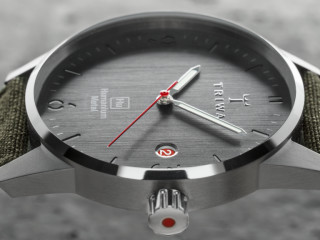
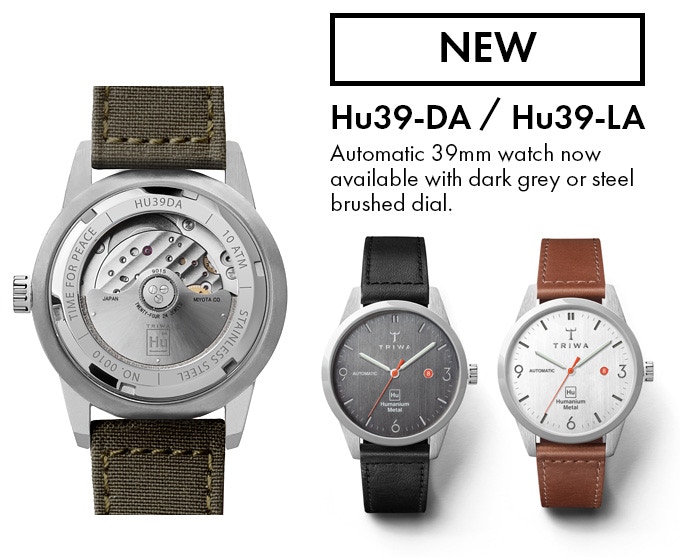
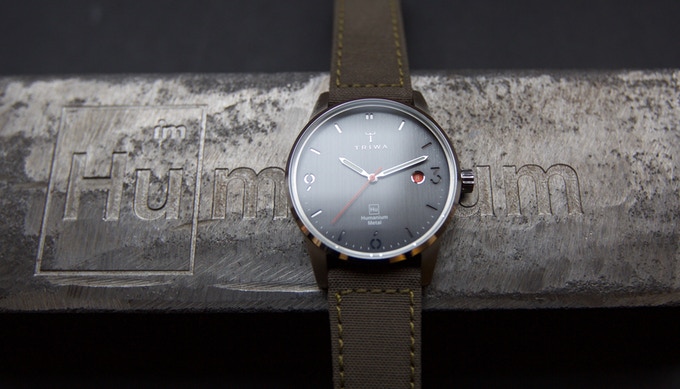
Our new line of watches is crafted from Humanium Metal, a material that is made from destructed illegal firearms. The result? A watch crafted with the utmost care that carries a strong symbolic value and contributes to rebuilding conflict torn societies.
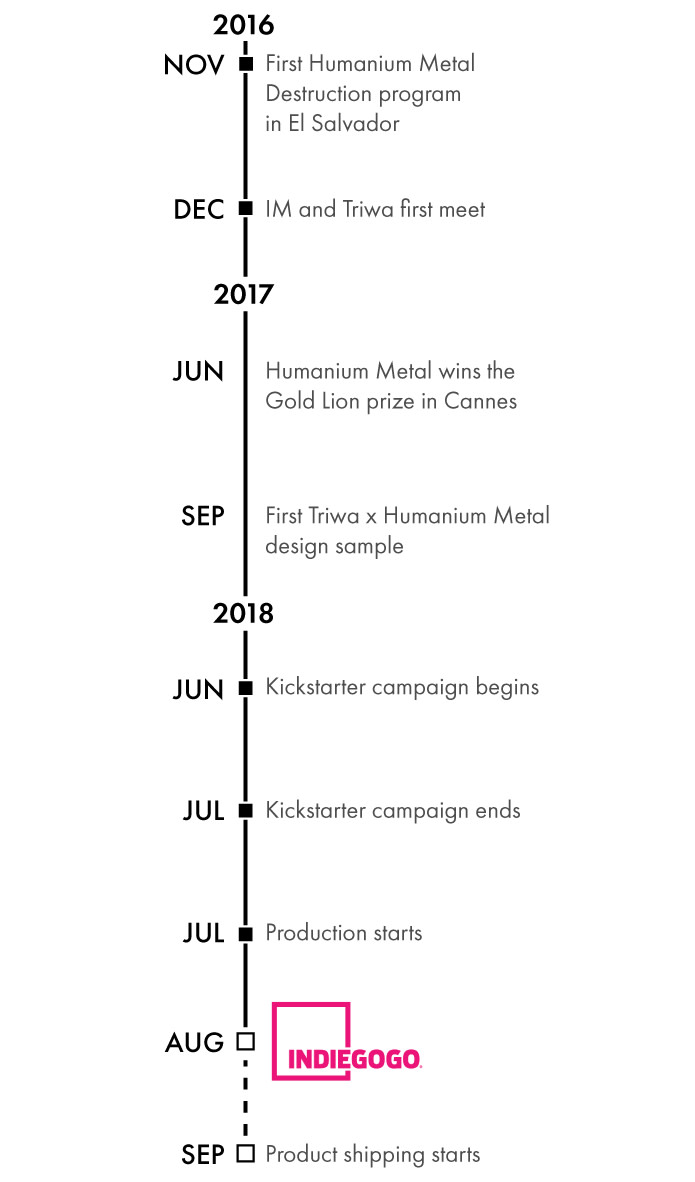
At TRIWA, we have developed watches for over ten years with the goal of transforming the industry. With our Humanium Metal watches we’ll be taking this transformation to the next level by creating watches from the metal of destructed illegal firearms. With your help, we will make a contribution in the fight against armed violence.
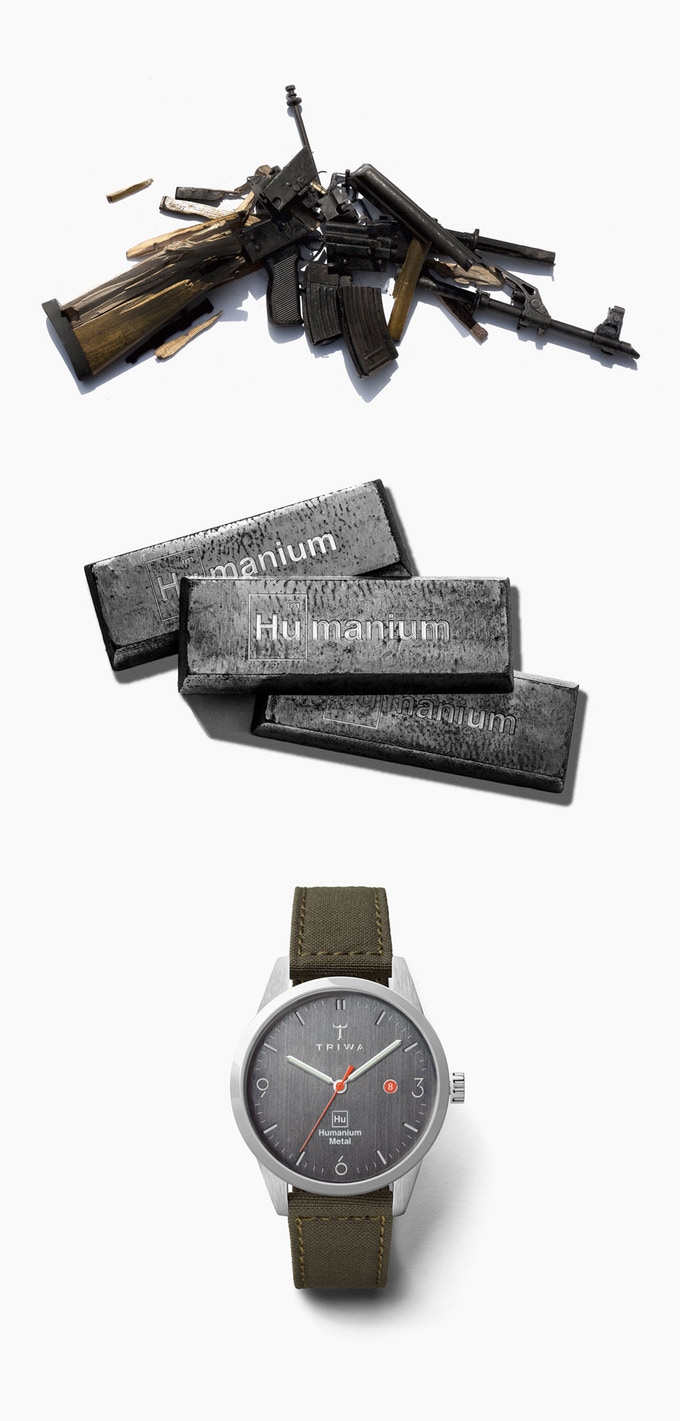
We've partnered with non-profit organization IM Swedish Development Partner, which retrieves and melts down illegal firearms from conflict torn societies, turning them into Humanium Metal. We then buy the metal, refine and mold it into watch cases that are later made into TRIWA x Humanium Metal Watches. 
The very purchase of Humanium Metal makes a difference: a portion of funds made from the sale circles back to the society where the firearms were originally collected and supports the victims of armed violence.
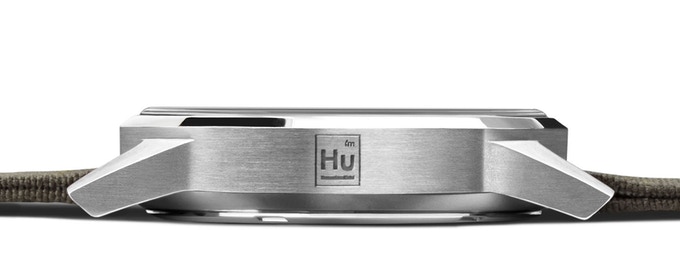
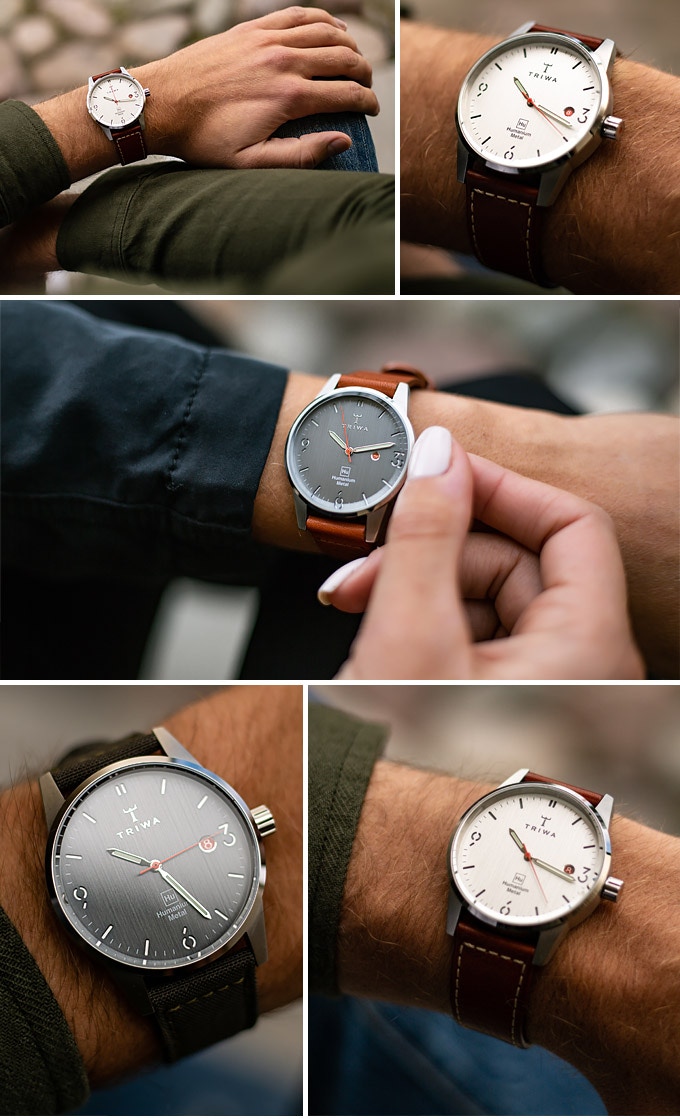
We have treated the Humanium Metal with the respect it deserves, molding it into a solitaire piece with contrasting metal treatments. The watch is filled with symbolic references, such as the Humanium Metal logo that is punched on the case, the embossed indexes on the dial and the fiery red second hand, date display and crown center.
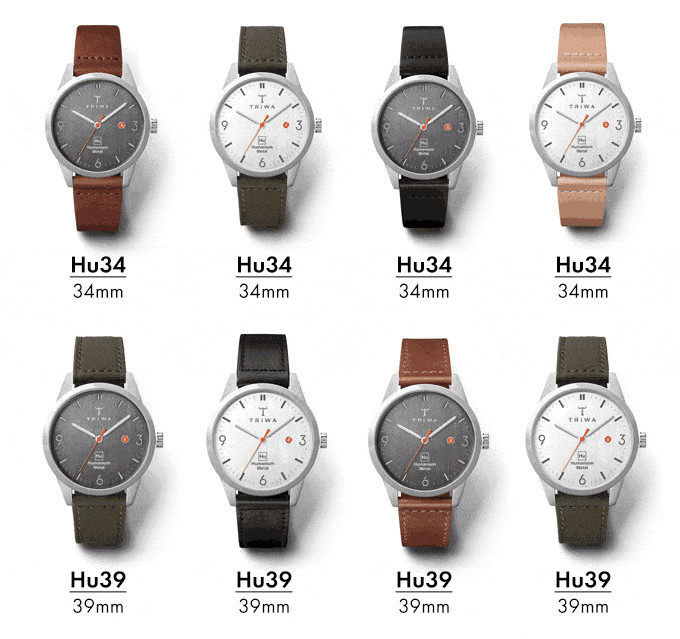
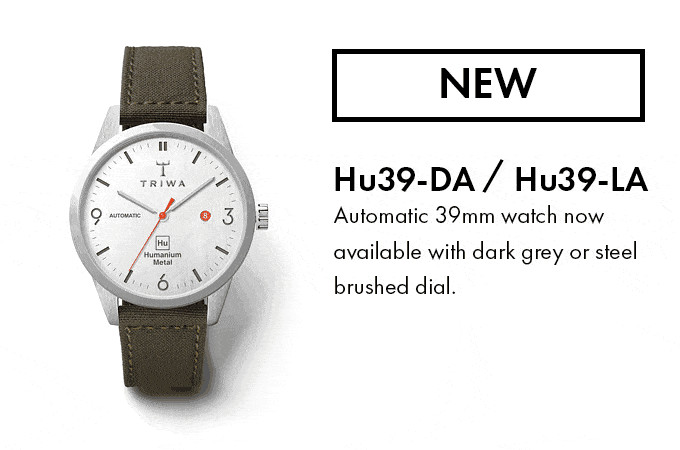
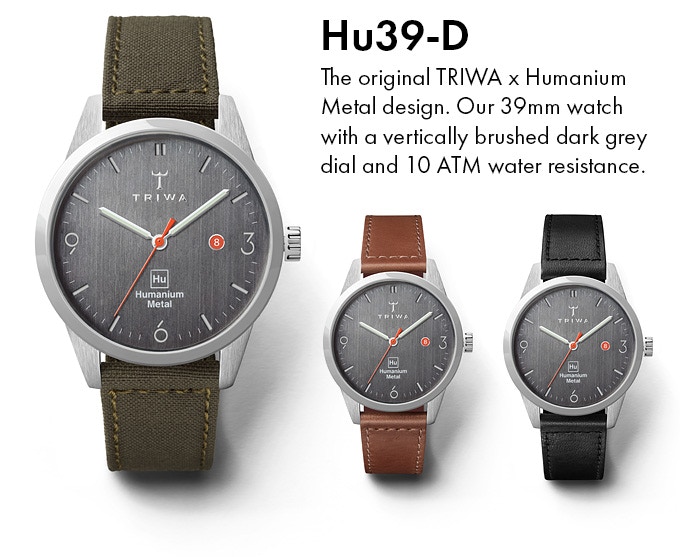
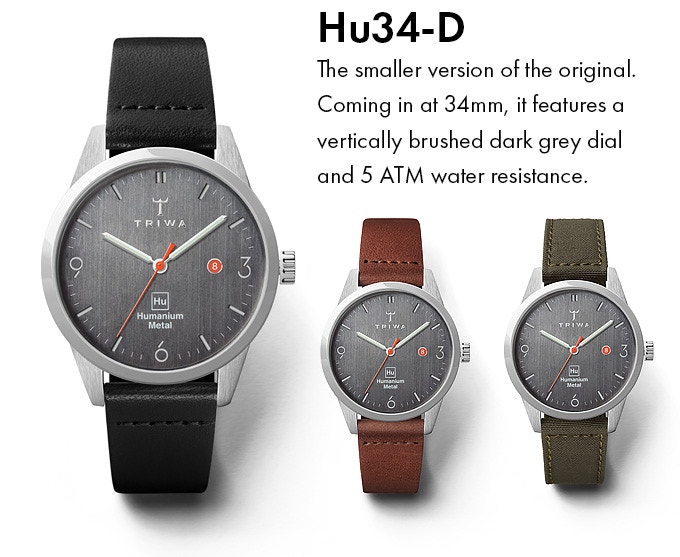
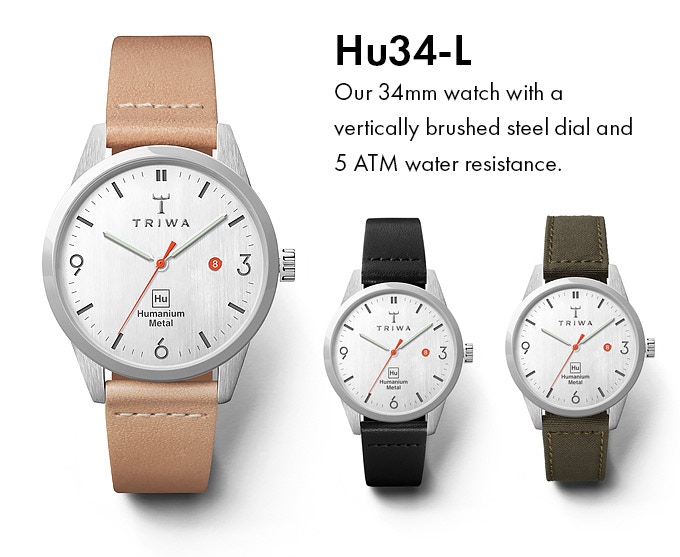
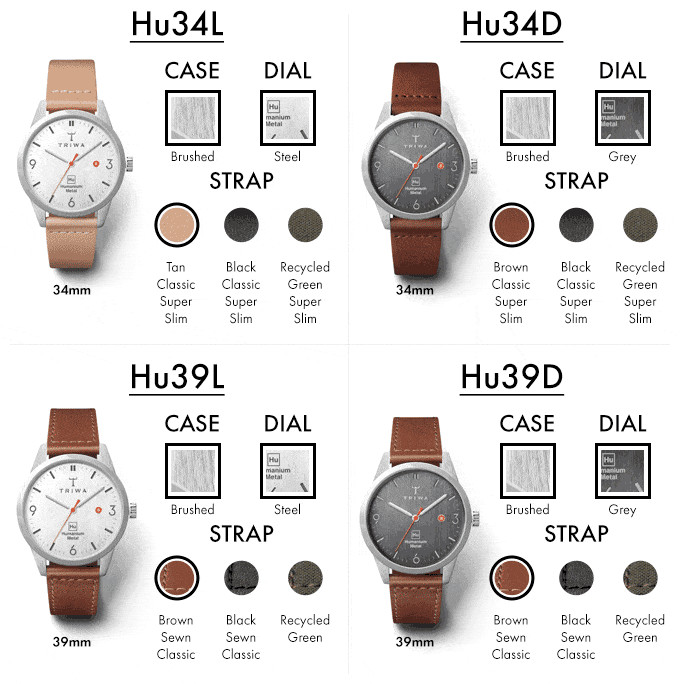
 You’ll be able to choose from two sizes: 39 or 34 millimeters with either a vertically brushed dark grey dial or light steel dial. Our latest model is the Hu39-DA which features automatic movement and comes in recycled green canvas, and black or brown tanned leather.  (Now avaialble in a light version as well!)
All TRIWA x Humanium Metal watches backed on Indiegogo will exclusively come with a scratch resistant sapphire glass and each model is numbered to designate the order in which the watch was produced.
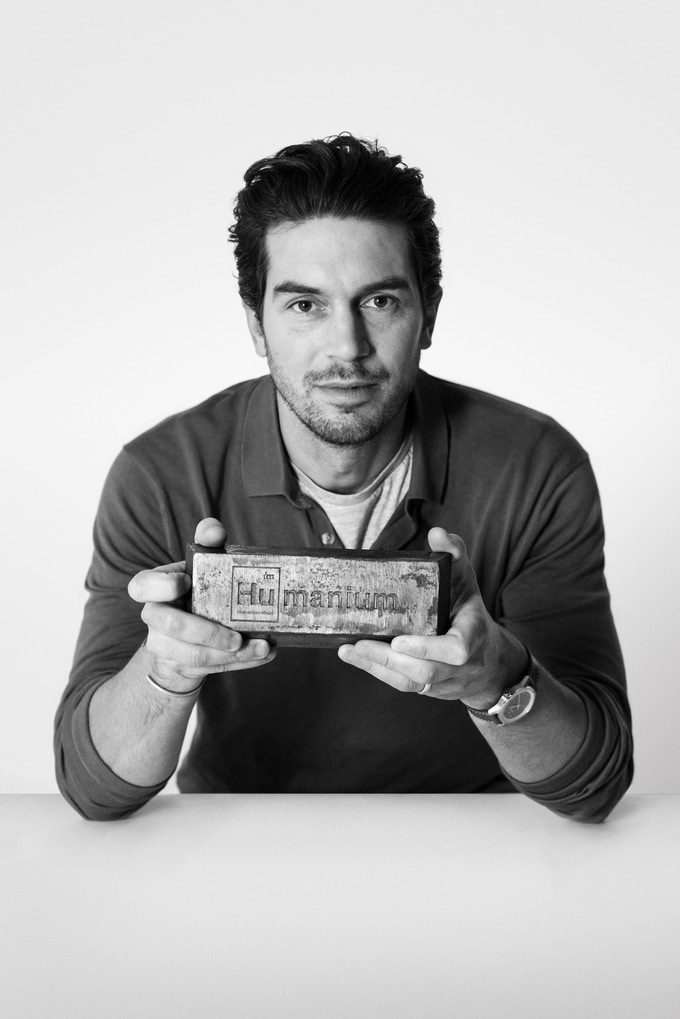
Humanium Metal by IM is an award winning material made from destructed illegal firearms and melted into a usable metal. The metal is crafted out of something that used to be a destructive force, now turned into something good. The sales from Humanium Metal generate financial resources used to rebuild conflict torn societies and support victims of armed violence. 
Humanium Metal is part of IM Swedish Development Partner’s strategy to help fulfill United Nations Sustainable Development Goal 16: Promote peaceful and inclusive societies for sustainable development.
The Humanium Metal has been refined into 316L stainless steel to meet the high standards of an everyday wristwatch.
By buying a TRIWA x Humanium Metal watch, you can help the world become a more peaceful place. 

1. IM Swedish Development Partner collects illegal firearms from conflict torn societies

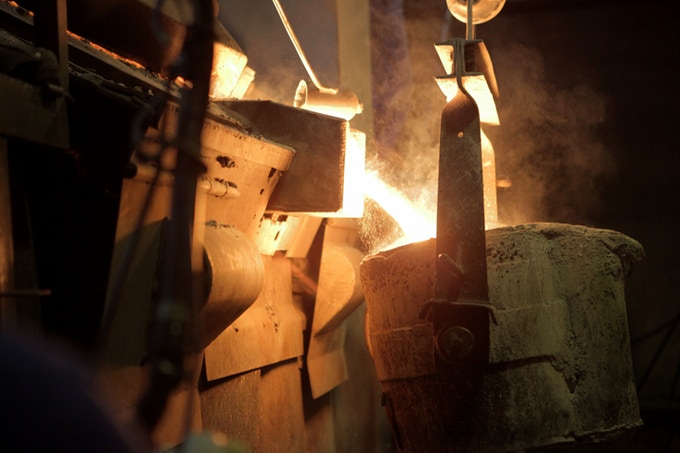
2. The weapons are deconstructed, separating metal from wood

3. Afterwards, the parts are melted in a furnace and casted into what we now call Humanium Metal

4. This is where TRIWA comes in. After purchasing Humanium Metal, we will use the material to craft our new collection, allowing monetary funds to circle back to the conflict torn societies where the firearms were collected.
The collection consists of 4 models and a variety of straps to choose from. Each model is molded from the Humanium Metal in a classic, three hand configuration with punched indexes and a contrasting red second hand, date display and crown. All watches come with either an olive green canvas strap made from recycled plastic or a Swedish organically tanned leather strap in black, brown or tan colour.
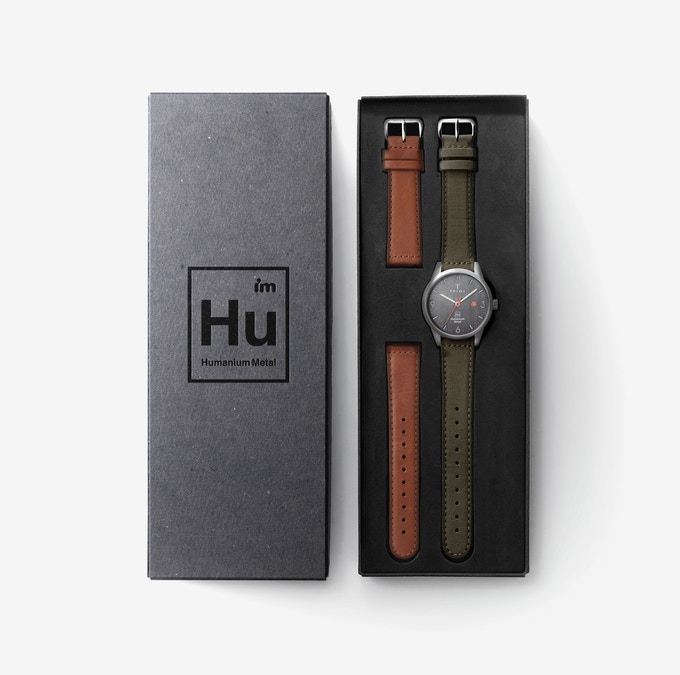
All TRIWA x Humanium Metal watches come in an exclusively made box with an imprinted TRIWA x Humanium Metal logo and a certificate of authenticity.
 **NEW**
Anyone who upgrades their pledge (by $44 / SEK 389 / €38 / £34) can get an additional strap at a 35% discount, along with special packaging and a tool to help you switch straps. 
The Humanium Metal initiative by IM has been endorsed by many international peace advocates.
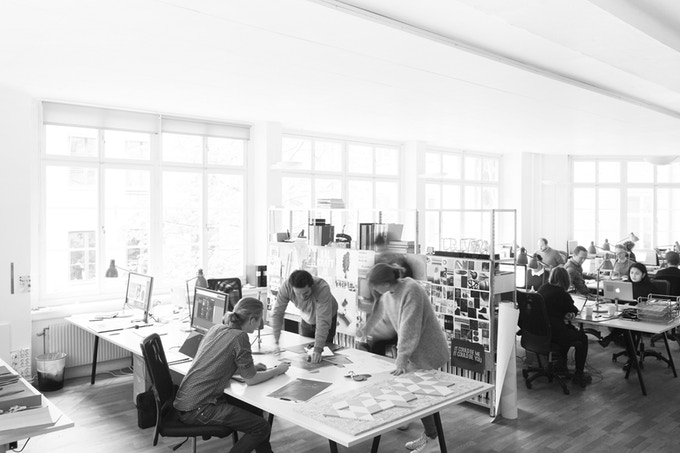
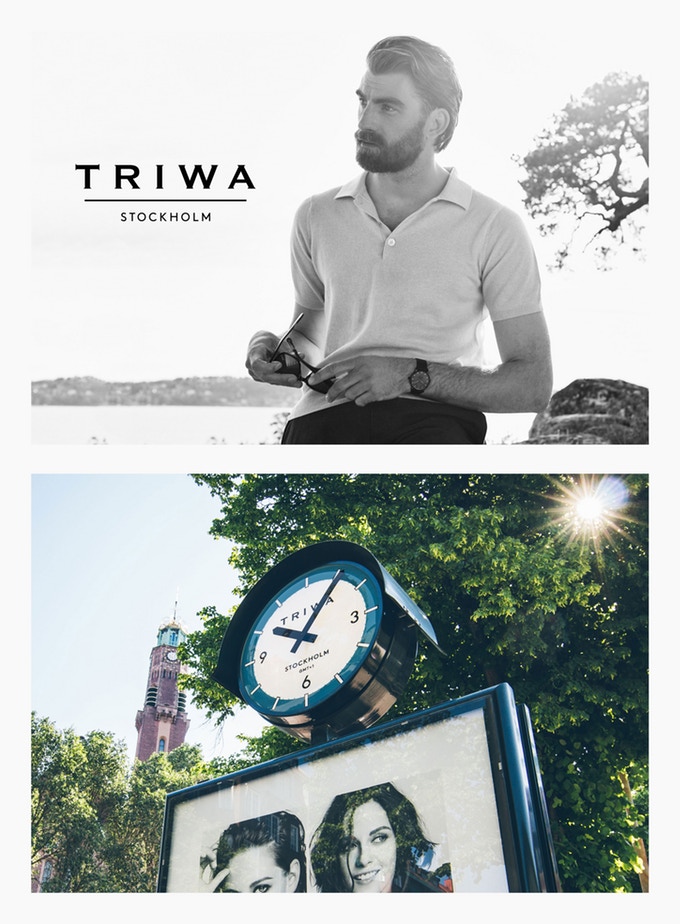
We are a Swedish watch and accessory brand founded in 2007 by four friends Harald, Tobias, Didrik and Ludvig. Our goal is to transform the watch industry through innovation, creativity and design. And, our name TRIWA is an acronym for TRansforming the Industry of WAtches.
We are also proud to be the Stockholm city timekeeper with 34 clocks around the city.

The Team Behind TRIWA x Humanium Metal
Tobias Ericson - Sales Director & Co-founder
Johan Imbro - International Sales Manager  
Ludvig Scheja - Creative Director & Co-founder
Tove Thambert - Head of Product Design
Didrik Wachtmeister - Head of Production & Co-founder
Rebecca Ericson - Social Media Manager
Harald Wachtmeister - CEO & Co-founder
Each watch comes with a certificate from IM, Swedish Development Partner, ensuring the material’s authenticity.